Barcelona’s Sagrada Família, Antoni Gaudí’s Masterpiece

Architect Antoni Gaudí’s masterpiece, Barcelona’s enormous Basilica of the Sagrada Família (Basilica of the Holy Family)—as of 2026, the tallest church in the world—is impressive, original, and remarkable. It’s light-filled and colorful interior is vibrant and crisply carved; it’s hard to miss the beauty in the interior’s exuberant expressions of joy. But is its agitated, unorthodox, unsettling exterior with its surprising juxtapositions of elements in unexpected shapes, combinations, and mud-colored materials beautiful? Yes, though not in the expected, traditional, formal way that medieval Gothic cathedrals or 19th century New England Greek Revival churches are. It is the strangeness of Sagrada Família’s beauty that makes it so extraordinary. Does that odd beauty amplify the basilica’s message of the power of Christian love, and the accessibility of that love to all, no matter their status or family or history? I think it does.

Though I am no longer a person of faith, I was raised in the Christian tradition. I still delight in many aesthetic elements of it—art, architecure, music, storytelling. Today, I approach religious structures like basilicas primarily as artistic and cultural marvels. However, I still feel their emotional resonance, and sense the deep spiritual impacts they have on believers. They still evoke in me strong feelings of respect, reverence, and awe.

The full height of Sagrada Família is viewed in May 2026, just after its tower was erected. Construction cranes are still in place.
Sagrada Família, in Barcelona, Catalonia, Spain, as seen in May 2026, just after its tower was erected, making it the tallest church in the world | Image via Wikimedia Commons by Canaan, CC BY-SA 4.0

To eyes trained on the crisp lines and exact precision of medieval Gothic cathedrals, the organic and indistinct quality of this Catalan basilica’s undulating and hard-to-decipher surfaces can be confusing, bizarre—even off-putting. The Nativity Façade in particular is full of irregular figures and materials that blend strangely into one another. They do not appear as crisply rendered formal expressions of Heavenly majesty and might, as medieval stone cathedrals do.

Gothic cathedrals had precise verticals and evenly spaced flying buttresses, each one perfectly reproducing the one before. Gaudí’s religious dioramas are accumulations of both recognizable and obscured images and shapes. Though also carefully carved, they give the sense of being freely sculpted, not carved slowly and precisely into wood or stone. They seem to have been gathered like mud by human hands, then pressed into the cathedral facade. These sculpted façades have a definite gravity and weight to them; they seem to drip downward from Heaven rather like (forgive me) a muddy and collapsing hillside.

The extreme detail and irregularity of the Nativity Façade is shown in detail. Made of monochromatic mid-toned brown stone, its Gothic windows are pressed closely together, bumping up against chaotic masses of botanical, human, and architectural details over doorways that incorporate columns, turrets, and other structures.
The chaotic Nativity Façade of the exterior of the basilica embeds tiny characters in highly detailed downward cascades that resemble melting clay when viewed from a distance | Laura Grey

Is such an erratic, unexpected, and distinctive agglomeration of elements ugly, bad, or wrong? No! Not to the millions who love Gaudí’s personal, human, and singular vision of the beauty and wonder of his faith and his God. For them, Gaudí’s basilica accomplishes things that such grand structures rarely can. These include evoking feelings of both grandeur and intimacy, and precision and irregularity. The basilica combines the unusual combination of feelings and forces to celebrate the elevation of a human family into a holy one—the beatification and glorification of the most elemental elements of human society: a mother, a father, and a child. In Gaudí’s religious imagery, visitors can recognize their own families, as well as themselves. The greatest, most all-encompassing story in a Christian life, the story of Jesus, is made personal, real, and human by telling it through a structure both more vast than is comprehensible, but also deeply intimate and personal.

Instead of static, precisely defined features, Gaudí’s surfaces feel hand-sculpted and in motion. This quality gives Sagrada Família the feel of a living, breathing entity. It entrances some visitors, and makes them feel closer to the emotional core of Christianity—a very deep and very human love of God inspired by the sacrifice of his human son. Of course, for others, the building’s style and structure evoke feelings of the instability and impermanence that come from relying on humanity’s irregularities and imperfections.

Some visitors revel in Gaudí’s expression of the humanity of God made man in the body of Jesus. They feel the undulating unevenness of the building materials and decorations signify the humanity of Jesus, Mary, and Joseph—the Holy Family for whom the basilica was named.

Others find greater security, awe, and majesty in the precision of traditional cathedral architecture. They look at a structure like St. Peter’s Basilica in Rome, or Our Lady of Chartres Cathedral in France, and are awed, yes. But they are also amazed that such a remarkable and precise celebration of the glories of Heaven could be accomplished on Earth by thousands of human hands over hundreds of years. They feel the humanity inherent in the majestic structure, too. Just not in the same way.

A view halfway down a wall from the ceiling of the Sagrada Família shows the variety of the window sizes, large and small, and the intricately carved stone walls that create hundreds of small angular shadows as lights beam down from above and inward through the glass
Light rushes into the basilica’s interior through blue, green, and yellow stained glass, painting the ceiling and walls with vibrant washes of color | Laura Grey

But whatever one thinks of Gaudí’s exteriors, the interiors of Sagrada Família are another thing entirely! What magical spaces full of jewel-toned light! Standing inside that magnificent space, so different from any other, one can understand how it so often inspires people to feel devotion, awe, and the sensation of a divine presence. Gaudí’s basilica may evoke discomfort because of the organic, undulating, even unstable quality of its exterior. But during the very same visit, its interior brings a sense of delight, ease, and glory through the surprisingly naturalistic forms and colors created inside, thanks to the play of light through its windows and its forest of unusual columns.

In one particular, Sagrada Família has something charming in common with the medieval cathedrals of 900 years ago. One sees evidence of lighthearted humor in Gaudí’s sculpted tortoises and turtles, small but devoted guardians of the basilica that can be found holding up several of the exterior pillars. The creatures are delightful, and they provide welcome lightness and comic relief, as gargoyles or self-portraits of sculptors and architects did on medieval façades. 

A tall view showing the interior of the basilica from ceiling downward, including Gothic arches and a rose window, a smaller circular window behind a white marble carving of a saint, and tall columns with strange, abstract lights with glass lenses that look rather like eyes surrounded by eyelashes
The basilica incorporates some traditional cathedral structures—rose windows, ceiling bosses, columns, religious sculptures, and Gothic arches—while also introducing distinctly modern architectural details and abstract botanical shapes | Laura Grey

Gaudí had an extraordinary vision for the basilica, for which he became chief architect a year after building was begun in 1882. By the time he died as a result of a tram accident in 1926, he had spent 44 years reshaping the plans and implementing his Gothic and Art Nouveau-inspired designs for the building, which was only one-quarter complete at the time of his death. The basilica is still unfinished, but it is nearing completion. As of 2026, with the raising of the 566-foot-high central Tower of Jesus Christ, Sagrada Família became the world’s tallest church. It was inaugurated and blessed by Pope Leo XIV in June 10, 2026, in honor of the centenary of Gaudí’s death.

Though the cathedral was his greatest work, Gaudí managed to design and oversee the construction of a number of other major buildings, several of which hold UNESCO World Heritage status, including the Park Güell, the Palau Güell, and the Casa Milà, Casa Vicens, and Casa Batlló; Sagrada Família’s Nativity façade, crypt, and apse; and the crypt of the Colònia Güell in Santa Coloma de Cervelló. The Catalan architect is so beloved in Spain that a sainthood guild has attempted to canonize him since 1992. In 2025, shortly before his death, Pope Francis declared Gaudí venerable; the Vatican described him as possessing “heroic virtue.”

A view of the ceiling includes views of the curving stone stairwells that climb to the ceiling among tree-like columns under bright floodlights that evoke stars in the sky
The sense of controlled chaos, movement, and intricacy of detail that plays out in monochromatic tones outside continues inside, but in a more linear way, and awash in color | Laura Grey

I’ve never before experienced such diametrically opposed aesthetic impressions about the interior and the exterior of a house of worship. That dichotomy is part of what makes this structure a masterpiece. There’s the fresh, strange wonder of the mind that envisioned it. And there’s his willingness to escape the linear precision of traditional cathedral architecture and explore a new, if sometimes lumpy, indistinct, even unsettling vision. The softened shapes bring this sacred space closer to the imprecise and organic shapes of nature, human bodies included. It may even make imagining the experiences of The Holy Family feel more personal and immediate to some visitors, while still expressing the grandeur of God. 

But, of course, what really brought the cathedral to life was a century of talent and faith expressed by the thousands of craftspeople who forced it into being. For an architectural plan is only a dream until muscles and sinews, eyes and mind, sweat and strain combine to make it real.  

At top:

The interior of the basilica was designed to evoke a forest. According to Gaudí’s vision, each type of column represents a different species of tree. The light that floods the interior reminds one of a colorful garden where we are born anew, of the changing of light from dawn to dusk, and of the glory of God | Laura Grey

Ms. Magazine & Gloria Steinem

Yesterday, journalist, feminist, and activist Gloria Steinem died at her home in New York City at the age of 92. As a profoundly honest, articulate, well-reasoned, tireless, and infinitely patient avatar and explainer of the need for gender equality and women’s rights, particularly during the 1970s and 1980s, Ms. Steinem was a powerful and influential voice. As founding editor of Ms. magazine, Gloria Steinem had a profound and positive impact on U.S. culture.

Last year’s HBO documentary about Ms. magazine, Dear Ms.: A Revolution in Print, explored the history and importance of Steinem and the magazine. Like Ms. Steinem herself, the documentary honestly addressed some of the magazine’s (and mainstream U.S. second-wave feminism’s) shortcomings, particularly the white, straight, middle-class focus of the magazine and the movement in its early days. Steinem and other Ms. founding mothers recognized and acknowledged that they needed to have a broader, more inclusive view of women and feminism, and relinquish some of their own personal vision in order to make room for the views of others under the wide umbrella of feminist thought.

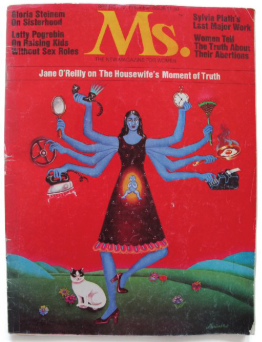
The cover of the first issue of Ms. magazine from spring 1972 features an illustration of a woman with eight arms and blue skin based on the Hindu deity Kali, but wearing a knee-length sleeveless contemporary dress and holding the avatars of modern life for women: a clock, a rake, a pan with a fried egg, a typewriter, a clothes iron, a steering wheel, a hand mirror and a telephone, under the worlds Jane O'Reilly on The Housewife's Moment of Truth. The woman stands on a green hillside next to a pet cat, the sky behind her bright red. The word Ms. is at the top of the cover in golden yellow.
The first issue of Ms. magazine was published in spring 1972

My mother was a charter subscriber to Ms. magazine, the groundbreaking feminist publication that premiered in Spring 1972. As a kid, I read every single copy the minute it arrived every month. I remember when that first issue arrived in the same mail delivery as Women’s Day, Family Circle, and McCall’s, three of the most popular women’s magazines of the day. The difference between those standard, established, housewife-oriented magazines—with their emphasis on homemaking, child rearing, cooking, cleaning, and husband-pleasing—and the empowering, infuriating, and exciting articles in Ms. was as clear as the difference between midday and midnight.

I was a latchkey kid back then, and a precocious one. My serious adult interests made me popular with teachers, but deeply unpopular with my peers. I spent a lot of time by myself at home, reading all manner of things, from literary novels and magazines to the naughty books Mom hid (not very effectively) under her bed. My young, divorced, single mom—a high school English teacher—arrived home about an hour after I did every day from the time I was six years old onward. As the first person home, I was always the one to get the mail, and that gave me first crack at Mom’s magazines. Much as I loved flipping through TIME and LIFE magazines, and searching the back pages of McCall’s to find and cut out the Betsy McCall paper dolls every month (I was, after all, still a little girl), Ms. was the first magazine I read every month. That habit continued from the initial Spring 1972 issue until I gave up on it when it was sold and changed its focus in the 1987.

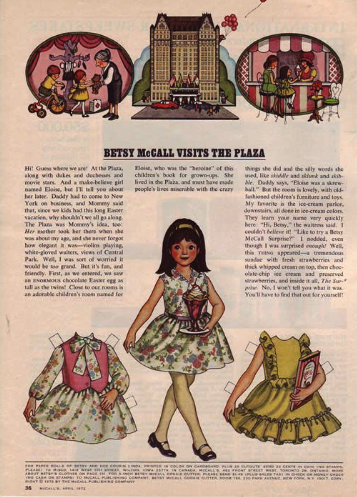
A page from a 1972 issue of McCall's magazine features an illustration showing a little girl in a dress holding an ice cream sundae. This is a paper doll, and she's flanked by two other dresses meant to be cut out and placed over the central image. The surrounding text says Betsy McCall Visits the Plaza and includes two paragraphs explaining the story of the fictional Betsy McCall's New York City adventure at the Plaza Hotel. At the top of the pge are three images from Betsy's day at the Plaza.
Every monthly issue of McCall’s magazine featured a page of Betsy McCall paper dolls for children to play with, like this one from 1972

For fifteen years, I flipped to the back of the magazine before reading another word so I could begin with the “No Comment” page. It consisted of photos of sexist, misogynistic, woman-dominating, infantilizing or pedophilic, insulting, even brutal imagery and messaging from TV, magazines, billboards, corporate PR documents, and other popular media. Seeing evidence of the relentless and ubiquitous yet socially acceptable advertising offensive against women was always shocking and enraging. The images were infuriating, and sent powerful messages about how pervasive sexism was (and still is).

Thus primed to recognize how baked into the system sexism was, I’d start over, returning to the beginning of the issue and reading through every article. There were features on sisterhood, nonsexist child rearing, abortion rights (remember, abortion wasn’t legal across the U.S. until 1973, nearly a year after Ms. first appeared on newsstands), opposing positions on pornography, cultural stereotypes of women, and gender inequality. I’d also read the interviews with feminist writers of different bents, from Andrea Dworkin to Betty Friedan to Angela Davis. I compared my nascent feminist opinions with theirs, often evolving over time as I grew up and saw the world and experienced sexual harassment directly and repeatedly in school, on the job, and simply walking down the street. Ms. helped me see that there were many different flavors, types, and branches of feminism, sometimes in opposition to each other. The magazine took the general position that opinions could, should, and did differ among people of goodwill about what feminism could and should address.

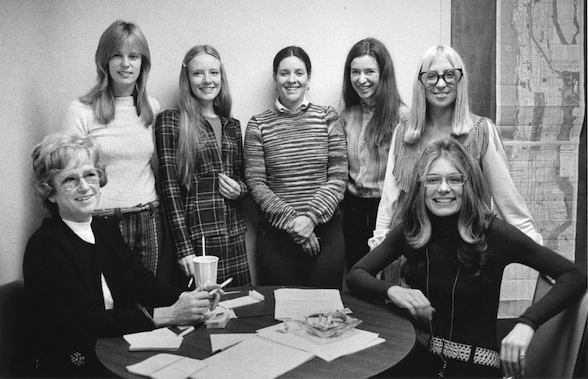
Seven of the founders of Ms, magazine smile and face toward the photographer in this staged photo by Jill Krementz. Gloria Steinem in a black turtleneck sits in a chair next to a round table at right. Letty Cottin Pogrebin and four other women stand behind the table. Another woman sits at the left of the table.
Gloria Steinem with some of the founders of Ms. magazine in 1971, shortly before the publication of the first issue of Ms. in spring 1972 | Photo by Jill Krementz

In the early era of Ms. magazine, two topics in particular were raised repeatedly. One was the definition of feminism, since so many people had negative associations with the word but didn’t understand its actual definition. The other was the proposed ratification of the Equal Rights Amendment (ERA.)

In those days, and even today, many people have refused to call themselves feminists, associating the term with loud, rude, anti-male opinions. However, the textbook definition of feminism is anything but outlandish or offensive to most of us. Feminism is simply the belief in and advocacy of social, political, and economic equality not based on gender. That’s really the whole shebang.

The proposed Equal Rights Amendment would have amended the U.S. Constitution to guarantee equal legal rights for all citizens regardless of gender. Often misrepresented as an effort by man-hating loonies to give women “special rights” or unfair advantages over men, here’s what the ERA actually said, in its entirety:

Section 1. Equality of rights under the law shall not be denied or abridged by the United States or by any State on account of sex.

Section 2. The Congress shall have the power to enforce, by appropriate legislation, the provisions of this article.

Section 3. This amendment shall take effect two years after the date of ratification.

That’s it. The ERA was a simple request for nothing more than legal equality regardless of gender or sex.

First drafted by women’s rights leaders Alice Paul and Crystal Eastman, and first introduced in Congress in December 1923, the proposed ERA went through decades of discussion and debate. In 1971, it was at last approved by the U.S. House of Representatives. After the U.S. Senate approved it the following year, in 1972, it was submitted to U.S. state legislatures for ratification, as required by the U.S. Constitution. Congress required ratification by at least 38 states within seven years. It would seem a foregone conclusion that ratification of such a simple, obviously fair, true, and just statement would have been accomplished well before that deadline. However, Congress had to extend the deadline from 1979 to 1982. And even after ten years of public debate, both deadlines passed and the ERA was still three votes short of the necessary 38 states in 1982. As of 2026, the ERA has still not been ratified, and the Constitution still does not guarantee equality to all without regard to gender.

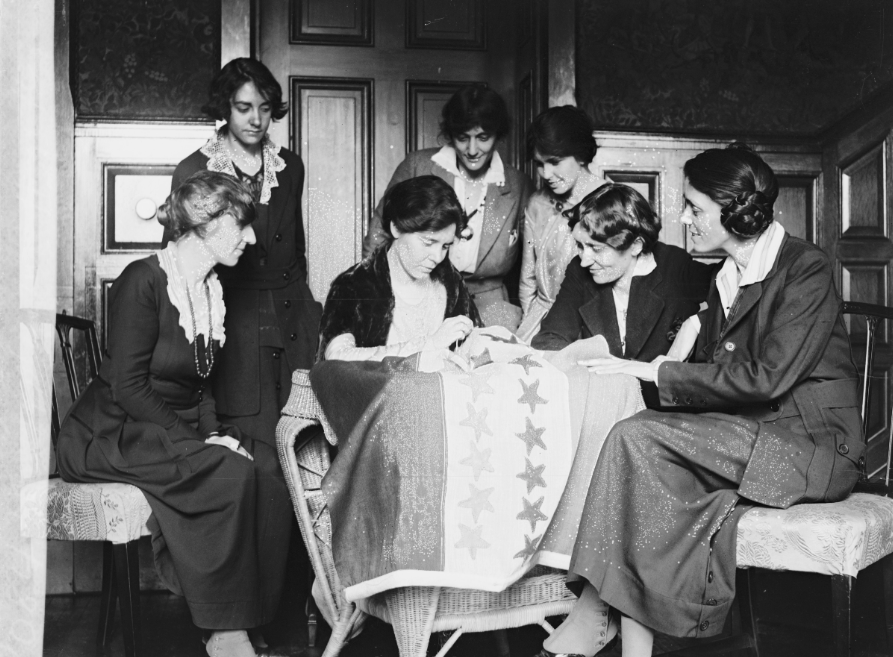
A black and white photo of seven young women sitting or standing around a wicker table over which is draped a suffrage flag, representing the fight for votes for women. Alice Paul sits at the center sewing a star on the flag.
Alice Paul, Crystal Eastman, and others sew a suffrage flag in support of votes for women, early 1920s

Gloria Steinem was certainly not the only well-spoken feminist of note to emerge as a thought leader and influencer (to use annoying contemporary terms) in the 1960s and 1970s. However, Ms. Steinem had great charisma, impressive composure and gravitas, and an uncanny ability to receive and deflect even the most egregiously offensive, condescending, insulting, infantilizing, and sexist attacks—many of them quite personal—in any setting. As the most prominent U.S. proponent of feminism in that era, she was seemingly everywhere, always responding with reason, wit, and specificity that left those who sought to degrade and wound her sputtering, red-faced, and laughable. They couldn’t hold a candle to her factual, well-reasoned, dignified message or delivery.

Ms. Steinem was conventionally beautiful enough to have passed as a Playboy bunny while undercover to write an expose about Hugh Hefner’s Playboy empire in the 1960s. But her physical attractiveness and beautifully modulated voice were actually stealth weapons against her detractors. Combined with her preternaturally calm demeanor and her skill with debate, her skills and attributes attracted positive attention, first to her, then to the subject of women’s rights and gender equality. They also gave the lie to the sexist stereotypes of feminists as being shrieking, irrational, and unattractive. It was always a joy to watch her surprise her ignorant antagonists by skillfully defending feminism in debates with everyone from sputtering attack columnists to sexist public intellectuals like Norman Mailer and William F. Buckley.

Today’s U.S. feminist discourse is more balanced, varied, and integrated across racial, cultural, and gender lines, and is more inclusive of all sexualities and multiple types of opinion than it was during Gloria Steinem’s most public era. But her life’s work continues to have a deep and lasting positive influence on feminist discourse. Ms. Steinem expanded and expressed her understanding of different feminist viewpoints, lifted up others who support the goals of feminism, and educated, inspired, and built a more egalitarian and respectful world for us all provide us all. What a powerful and lasting legacy.

At top:

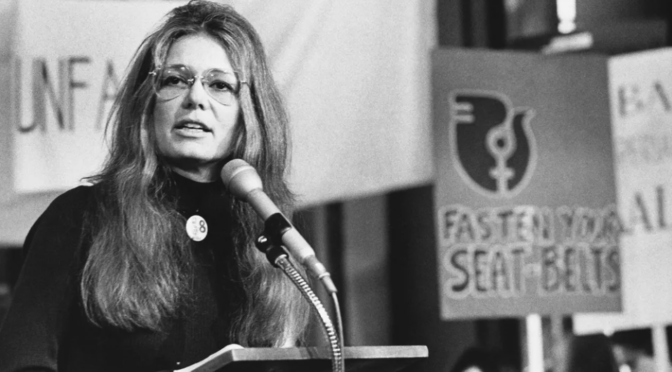
Gloria Steinem addresses a feminist rally, early 1970s

Why Do People Collect Things?

Since I was a very little girl, I’ve always enjoyed collecting things. I started with books, craft supplies, and stuffed animals, but it soon blossomed into a more expansive and extensive collection. By the time I’d turned 10, I’d already begun going to thrift shops, antique stores, and yard and garage sales to see what treasure I could find among others’ cast-offs. By the time I was in middle school, I was already buying velvet cocktail dresses and 1950s prom dresses from the Salvation Army for $5 apiece. I’d started collecting 1940s perfume bottles, powder compacts, and high heels at hospital thrift shops and the local St. Vincent de Paul outlet by then, too.

None of my friends were into this hobby. But I understood the appeal of it when I saw the things my Aunt Betty found on her weekly garage sale rounds. She was so skilled at finding cast-off treasures to shower the rest of the family with at holidays that the family took to calling her Garage Sale Santa. If you needed something, all you had to do was tell Betty, and she’d find one for you at a garage sale for 50 cents in no time at all.

Though some chic young things were already buying cool old clothes in the 1970s (the Pointer Sisters’ gorgeous 1940s vintage ensembles come to mind), I never heard talk about collecting “vintage” pieces until decades later when the term grew popular. When I was a kid, old clothes were old clothes, and my mom rolled her eyes at my penchant for bringing home a Chinese silk brocade jacket made before I was born, or asking her to turn the beaded satin handmade dress I’d bought into a Halloween costume for me. Why on earth, she asked me, did I want to wear old junk when I could have something new?

Discovering, researching, and learning about histories of objects made before my time has always brought me joy. So much beauty is lost every day when people damage or destroy things they no longer see any point to. I love keeping those things out of the waste stream, cleaning and polishing and mending them, and giving them a new life.

Enjoying more things has always meant more opportunity for discovery and fun, it seemed to me. That more-is-more maximalist streak continued as I got older and began collecting stamps, coins, and records, and later dishes, glassware, and artworks. Along the way I’ve found and dragged home all sorts of odd and interesting old objects, from Edison lightbulbs to antique sewing machines to 75-year-old booklets full of banana recipes. Often they have little to no inherent value to anyone else. But I still treasure them. Other times I’ve found rare and special objects that collectors actually do prize. They were sold or even given away by people who thought they had a garage full of junk. Junk! Can you imagine?

But when does a charming collecting hobby become a hoarding habit? When is it a noble desire to save overlooked handmade beauty from oblivion? And when is it evidence of unbecomingly covetous materialism?

I recently wrote an article about why people collect, what it means, and how their collections affect their lives for At Home with Style, the free online interior design magazine I’ve edited and published for the past few years. I thought it might be interesting to readers beyond my design website’s usual audience, so I’m sharing a link to the article with you here. I hope you enjoy it.

At top:

A few of my favorite vintage and antique porcelain pieces gathered over the years | Photo by Laura Grey

At Home with Style

Several years ago I began publication of a free online magazine of interior design called At Home with Style. My mission wasn’t to force my opinions on others—I just wanted to help readers make their own design goals a reality. My design website (which has no paywall and doesn’t require registration to read the articles) includes medium- and long-form articles on scores of interior design-related subjects. I’ve included features, Q&A sessions, architectural and design history, links to other articles and resources—a whole bundle of tools to help readers achieve their design dreams. My hope has been to use my decades of experience in buying, selling, decorating, remodeling, and consulting on a number of homes and gardens to help others create spaces that they feel good in.

I encourage readers to figure out what makes most sense for them. Once they know what styles and features they like most and how they want to live, they’re invited to browse through my articles to pick and choose whatever might help them fulfill their own vision. And as I point out throughout the site, what I think about a design doesn’t matter if it doesn’t work for you.

The exterior of the Frank Lloyd Wright Home & Studio in Oak Park, Illinois. Shown is a low wall made of poured concrete and brick in sections with shingles and brick on others. The wall is topped with Wright's own half-globe-style planters. Behind is a view of the shingled exterior of the octagonal tower that held Wright's studio.
The Frank Lloyd Wright Home & Studio is featured in “Decorating Tips from Frank Lloyd Wright,” my article about the home and studio he created for himself and his family in Oak Park, Illinois—it was the very first home he designed and had built | Laura Grey

At Home with Style features articles on many popular topics, including these:

• Some of the most popular styles of home decoration from around the world and how to make them work in your home

• Tips on choosing and caring for textiles, home decor, garden plantings, and flooring (even if you have pets)

• How to choose and maintain outdoor furniture so you can double or triple its years of beauty and service

• Where to source sustainable home furnishings

• How to renovate your home for accessibility so you can age into it comfortably and accommodate disabilities (your own or those of others in your home) safely

• Learning how to tell whether vintage or antique dishes and glasses are contaminated by lead (or are safe to use)

A lush green lawn is surrounded by berms covered in trees, climbing roses, and all manner of blooming perennials. A brick-fronted Cape Cod-style house with wooden shingles and a white door is at back left. On and next to the porch are painted antique chairs.
A beautiful, comfortable garden setting goes a long way toward creating a mood—I’ve included several articles on creating and maintaining a beautiful, healthy garden. Here’s the cottage garden my talented friend, the garden designer Shon Robinson, helped me create for the Pacific Northwest home I owned circa 2010 | Laura Grey

I don’t outsource the writing of At Home with Style—I write every word of it myself. And I don’t take ad money, get kickbacks or subscription fees or other payments for my articles, or receive freebies in exchange for my opinions. I just want to share some of the many tips and tricks I’ve learned over the course of decades to help you find the inspiration and help you need to make your home feel the way you want it to feel.

An antique chest of drawers on slender legs is painted teal, and its drawer fronts have been covered in a patterned wallpaper featuring birds, leaves, and lemons. Source: @thedovestail on Instagram
An elegantly restored vintage chest of drawers is given new life thanks to a coat of peacock blue-green paint and drawers covered in wallpaper by vintage furniture transformation artist Beth West of The Dove’s Tail. I included this example of Beth’s beautiful work in my article “Off-the-Wall Wallpaper Projects” | Instagram: @thedovestail

My goal for At Home with Style is to help you establish a home that you find safe, comfortable, beautiful, functional, and affordable. I want to help my readers learn about the style, decorating, historical details, and maintenance tricks and resources I’ve found worthwhile over the past 40 years. I hope you enjoy it.

A small but vibrant room decorated for Christmas includes a tiny decorated tree, ornaments hanging from Venetian blinds, a glass bowl full of ornaments next to a vase of winter greenery, and piles of gifts on the floor in front of the door to a balcony with a view of apartments beyond
I believe any space, no matter how large or small, should reflect your own style, whether for holidays, special occasions, or any old night of the week | Laura Grey

At top:

Your sense of style is about you and what makes you feel good, not about what someone tells you looks or feels “right.” If it’s safe, functional, and comfortable for everyone in the home, and it makes its inhabitants feel good, it’s golden. It’s your home—it should feel like you, not like someone else | Paul Hanaoka for Unsplash

Poor You

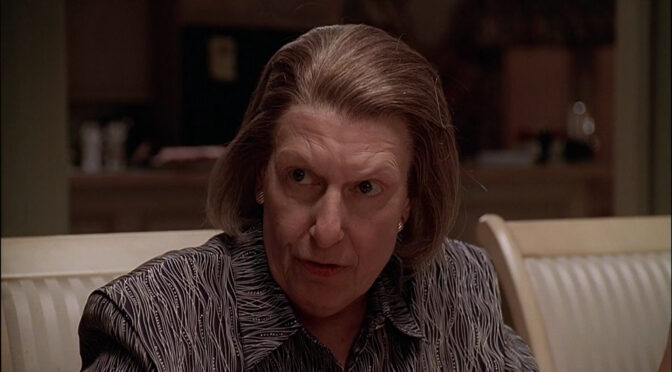
I’ve watched the whole of The Sopranos at least five times. Every few years I watch it all over again, and each time I’m reminded me of how incredibly good Nancy Marchand was in the role of Tony’s narcissistic, always-the-victim, faux-martyr mother, Livia.

Before The Sopranos, Marchand had been known as a gifted stage actress, as well as for her portrayals of elegant, powerful women, such as the patrician newspaper publisher Margaret Pynchon in the popular TV show Lou Grant. For her portrayal of that character—which was based on Washington Post publisher Katharine Graham—Marchand won four Emmy Awards.

Today the esteemed performer is best remembered for her marvelous turn as Livia Soprano. Livia is a bullying harridan who feigns weakness and cluelessness, but she works behind the scenes to form vendettas that undermine those who go against her—including her own family.

Nancy Marchand, a long-time chain smoker, was suffering with lung cancer, COPD, and emphysema throughout her time on the series, which makes the power and impact of her performance even more impressive. For her indelible performance as Livia Soprano, she earned a Golden Globe in 2000. She died that same year, one day before her 72nd birthday.

Series creator David Chase’s decision to name her character (who was modeled on his own mother) after Empress Livia, the conniving wife (and many say, murderer) of Augustus Caesar, was an apt and brilliant move. Both Livias wielded power from behind the throne, were assumed to be supportive but were forever furthering their own motives, and built up or destroyed the men around them with their powerful words, passive (or active!) aggression, and behind-the-scenes conniving.

Livia Soprano’s signature response to everything Tony says to her is a malevolently mocking “Oh, poor you!” Each time I hear a certain leader whine and moan about how hard he has it and how his life is so unfair, all I can hear in my head is Livia’s voice bleating out her complete lack of sympathy for a self-victimizing man who’ll do anything to get what he wants.

The Woman at the Heart of Hamnet

Oscar-winning Chinese filmmaker Chloé Zhao’s stunning 2025 film Hamnet and two other introspective and intimate Best Picture Oscar nominees this year feature stories of familial tension and loss. Zhao’s intense and beautiful contender for the award joins Sentimental Value and Train Dreams, all of which often convey a great deal in few words.

The film is named for the son of William Shakespeare and his wife Agnes (who was also known as Anne Hathaway). As the film tells us at its outset, the name Hamnet was often used interchangeably with the name Hamlet during Shakespeare’s time. Hamlet is, of course, also the name given to Shakespeare’s most famous character, as well as to Prince Hamlet’s father (the late King Hamlet), and to the play that bears their shared name.

Hamnet is frequently, and accurately, described as a film about how Will and Agnes handle their grief over the loss of their son. However, that spoiler (which every film reviewer and plot description I’ve seen has broadcast to the world) does not express how unusual Will and Agnes’s relationship is. A short blurb can’t convey how much the loss of a child affects a family’s world, and in this case, the world at large. Nor does it make clear that neither Will nor his son Hamnet stands at the heart of the film, as one might expect.

It is the earthy and somewhat mystical Agnes who carries the film on her strong shoulders. She immediately impresses us with her forthright nature. The film introduces Will—surprisingly and intriguingly—as her awkward, less self-assured, more inwardly focused partner. This is not the confident and winning playwright whom Joseph Fiennes portrayed in the light and comic Oscar-winner Shakespeare in Love (released in 1998 and written by the late playwright Tom Stoppard). Hamnet shows us a fragile, often melancholic version of Will, a man who loves his family deeply, but is driven by his own intense need to create, and must leave the family’s rural home to pursue his dramatic gifts in London. 

A close-up photo showing the faces of Jessie Buckley as Agnes and Paul Mescal as William Shakespeare in the movie Hamnet. Both actors are shown with their faces in closeup and their faces and eyes cast down.
Jessie Buckley as Agnes and Paul Mescal as William Shakespeare in Hamnet

Having read much about the impact that grief over the death of a child has on the story, I put off seeing the film. I feared it would leave me devastated, like William Styron‘s Sophie’s Choice and Thomas Hardy‘s Jude the Obscure did. But I didn’t anticipate how co-writers Chloé Zhao and Maggie O’Farrell (whose screenplay is based on O’Farrell’s novel) would bring their characters and audience to a point of catharsis as moving as any I’ve seen this year. 

It would be misleading to say that it is a feel-good movie. It deals with grief in heartbreaking and believable ways. The cause of characters’ pain doesn’t evaporate when they glean insights or find ways to connect to others through their grief. But Hamnet helps us see how understanding and empathy can create not only essential human connection, but also great works of art. The story examines how grief can help people discover deeper love and greater purpose in their lives and relationships. It does not argue that grief is good, nor that suffering is worthwhile. But it does help us see how even something dreadful can lead us to understand others more deeply or clearly, or impart knowledge that lets us create things we couldn’t otherwise achieve. 

The magic at the center of the production is the transcendent performance by Best Actress Oscar nominee Jessie Buckley. She plays Agnes with profound passion, honesty, and heart as the counterpart to Paul Mescal‘s moving performance as Will. In playing a woman who engages with others and the world in an open, direct way, Buckley could have come across as brash. But Agnes’s inability to play the coquette or defer to her family’s desires isn’t selfish or brazen. She simply cannot be untrue to those whom she loves, or to the things she holds dear and believes to be true. 

Agnes is bold, stubborn, grounded, and sometimes wary. But there is a purity and sincerity to her that moves her family, and us. In Hamnet, Jessie Buckley delivers an astonishing and luminous performance.

The Things We Say Without Words: Train Dreams, Sentimental Value & Past Lives

Oscars are often awarded to big, talky American movies full of rapid-fire dialog and insistent energy. But this year’s Best Picture nominees include powerful but quiet films that inspire deep emotion thanks to strong but subtle performances. Both Train Dreamsdirected and co-written by U.S.-born director Clint Bentley, and Sentimental Valuea Norwegian film directed and co-written by Joachim Trier, create their magic using surprisingly few words. The same was true of Past Lives, Korean-born director Celine Song’s moving 2023 Best Picture Oscar nominee.

Train Dreams

Train Dreams is rich with lush and imposing scenes of rural Washington State, which stands in for Idaho ably thanks to Adolpho Veloso’s Oscar-nominated cinematography. Indeed, beautiful but often-dangerous nature plays such an important element in the story, one could almost say that the landscape is one of the film’s main characters. 

Joel Edgerton’s understated performance as logger and railway worker Robert Granier is at the heart of the story. He uses few words but conveys deep feeling through gesture, tone, and his heartbreakingly expressive face. Edgerton was well cast in this role, since he’s especially gifted at expressing sadness, loss, or pain in a compelling way, without making a big, bold fuss of it. His isn’t a flashy kind of charisma, but he draws us in for exactly that reason. It’s his quiet quality that draws us closer, since we don’t want to miss a word. 

The arc of the film, which is based on Dennis Johnson’s novella,  includes a good deal of difficulty and lost opportunity. The story—full of love, loss, and longing—is episodic. It moves through a series of Granier’s introductions to people who connect, deeply but often briefly, to the introspective, quiet, often lonely man. Most are themselves introverted and comfortable being on their own for vast stretches of time. 

Yet Granier and those who move through his life connect to each other quietly but profoundly, without a lot of talk or explanation. They bond over shared kindness, sincerity, and modesty. We don’t need to be told that these are good people; we can see and feel who they are through their actions. The film does include narration, but it’s not overly intrusive. The writers trust the audience to be able to read into the characters’ words and actions without a lot of wordy exposition. The script doesn’t explain the characters’ motivations or backstory more than necessary. 

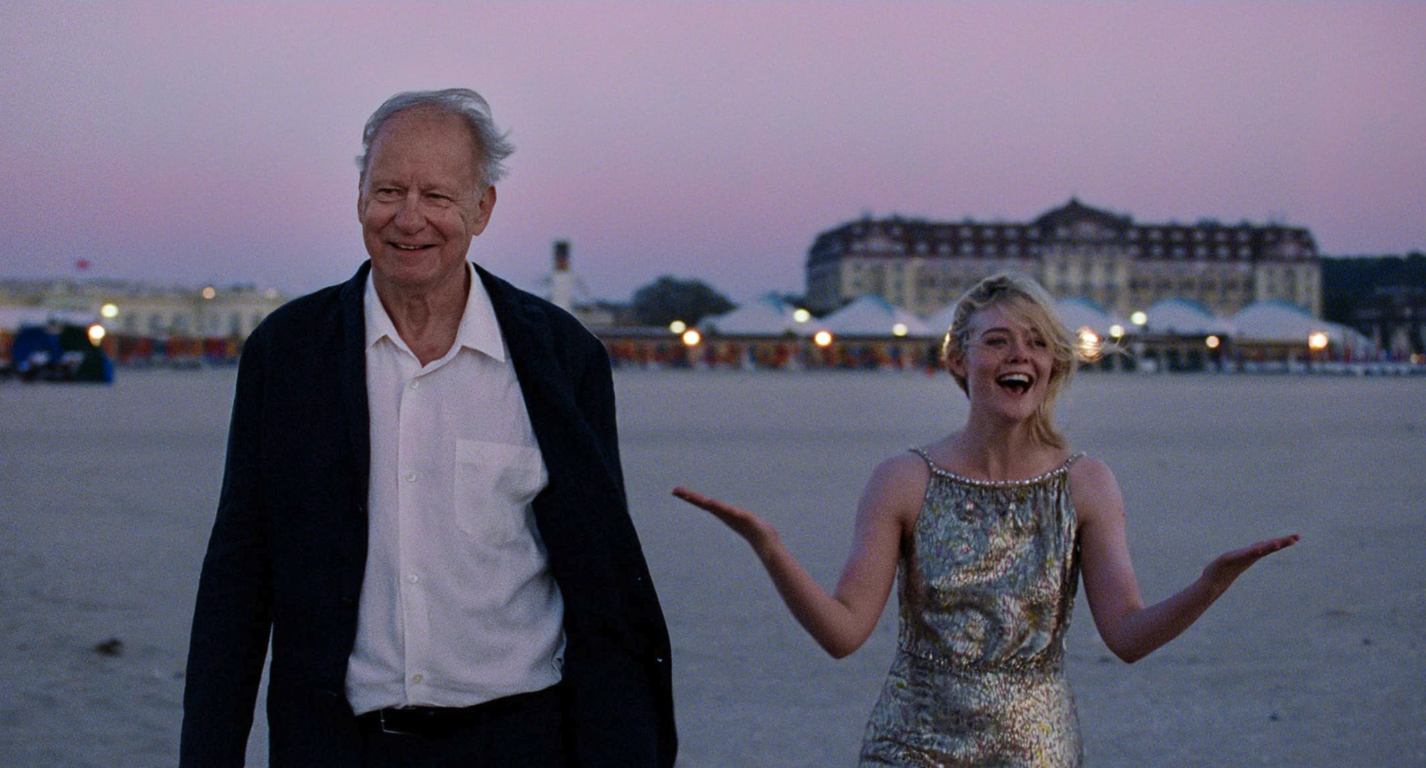
Stellan Skarsgård and Elle Fanning walk on a beach at dawn in the film Sentimental Value
Stellan Skarsgård and Elle Fanning in Sentimental Value

Sentimental Value

Swedish actor Stellan Skarsgård brings his own quiet intensity to Sentimental Value, which has earned him his first Best Supporting Actor Academy Award nomination. He portrays a famous and much-admired film director who has always had difficulty connecting emotionally with the people he loves most. 

Sentimental Value begins by introducing us to the house at the center of the story. Just as the landscape of rural Idaho plays an important role in Train Dreamsthe Borg house in Sentimental Value is an essential character from beginning to end. The film begins by introducing us to the house in the many forms it’s taken over the previous century, easing us into the story through soft humor and just enough back story. Then the players take over, speaking to each other naturally in Norwegian, Swedish, English, and Danish by turns. 

The film is very Nordic in tone, not only because of the location and primary languages spoken, but because of how much of the story is unspoken. The feelings are clearly there, but expressed over time, and through movements—the slow spread of emotions across a face, the silent exchange of looks between people, the mounting realization of what is about to happen based on seemingly simple, everyday movements that all add up to something shocking. 

Skarsgård is a master of discomfort. In so many of his best roles, we understand how he’s feeling not because of the words he says, or even the way he says them, but by the way he shifts in his chair and diverts his attention away from things he doesn’t want to deal with. He looks silently into his lap, unable and unwilling to say the one thing that most needs to be said. Here, as in his masterful performance as Detective John River in the excellent 2015 British TV miniseries River (not to be confused with the 2012 horror series The River) Skarsgård is comfortable inhabiting discomfort. In each role, he plays a highly skilled and insightful professional. As both Gustav Borg and John River, his characters’ most intense pain comes from the emotional reticence that they must face before solving their greatest professional challenges.

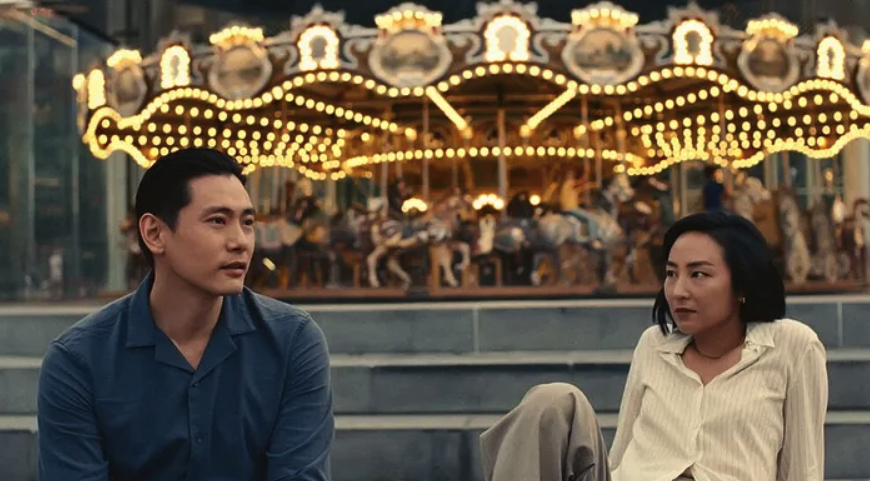
Teo Yoo and Greta Lee sit on a bench together in front of a brightly lit merry-go-round in the film Past Lives
Teo Yoo and Greta Lee in Past Lives

Past Lives

South Korean-born Canadian director Celine Song’s debut film, Past Lives, has much in common tonally with the films mentioned above. Nominated for Best Picture and Best Original Screenplay Oscars two years ago, this film shows similar restraint. Its dialog, which is mostly in Korean, is spare. Its most important feelings are often left unexpressed, but made clear to the audience in the spaces between words. 

Past Lives focuses on two characters, Nora and Hae Sung, close childhood friends in South Korea who lost track of each other when Nora’s family moved to the U.S. We first see them together in childhood, clearly enjoying being in each other’s company, but often doing so silently, or while sharing few words. We next meet up with them some two decades later, when they reconnect online, then decide to meet in person. Though some important dialog is spoken aloud, much of what passes between them is expressed through silences—eloquent and beautiful ones.

I saw Sentimental Value shortly before Past Lives. While watching actors Greta Lee and Teo Yoo give such moving performances in the latter, I was struck by the similarity between Nordic films (such as those by Joachim Trier and Ingmar Bergman) and Celine Song’s film. Though outwardly quite different in style and subject matter, they share a great deal in their characters’ comfort with silences, and in the stories’ ability to express deep feelings with few words. Both Trier and Song were born into cultures that prize emotional restraint, comfort with silence, and the belief that scenes built on tacit understanding often convey more than a page of emotionally heated dialog can. 

When expressed by talented and thoughtful writers, directors, and actors, a spare script with limited dialog can allow actors to shine if they have the restraint and comfort with nuance that makes these three films so special.

At top:

Felicity Jones and Joel Edgerton in the 2025 film Train Dreams

An Extraordinary Evening with Jessica Williams

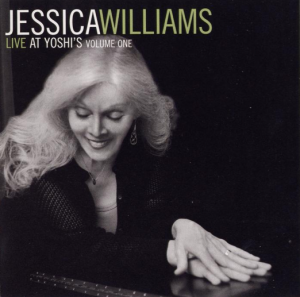
Jessica

[The vastly talented Jessica Williams died on March 12, 2022. I originally published the following essay about her in July 2005. Jessica became my friend the night I first heard her in concert back then, and I was honored that our friendship deepened, and we stayed in touch until just a few months before her passing.

Jessica was a remarkable musician and a fragile and beautiful human being. Her website is sadly no longer online, but you can still find examples of her exquisite music. In memory of Jessica, who was born on St. Patrick’s Day in 1948, I share below the piece I wrote about the first time I heard her in person. Jessica enjoyed it enough to share it on her own website for many years. Oh, how I miss my lovely friend.—LG ]

Two nights ago I was invited to share in a magical, memorable evening of of music. Jessica Williams, the extraordinary jazz pianist, played an intimate and elegant concert at the home of my friend Richard. He had spoken to her after her concerts in Seattle over the years, and had the good fortune to be seated next to her on a flight from San Jose to Seattle some months back, which gave them time to share a friendly conversation. Richard is a jazz pianist himself and the owner of a fine piano, and he and Jessica spoke about the idea of her performing at his home for a small group of local jazz aficionados after she finished her bigger Seattle gigs.

Happily, the idea became a reality. Seattle is a great town for jazz; the jazz community is avid, active, and friendly, and small enough that everyone gets to know everyone else before too long. This little group knew Jessica’s music well, and the buzz of delight and amazement that we could all get so close to a jazz master had us all feeling a little tipsy before anyone had a drop to drink.

Jessica is well-known and loved among jazz fans and players; the frequently repeated question is, why isn’t she better known to the rest of the world? She’s noted for her improvisational brilliance, has played with jazz greats such as Dexter Gordon and Leroy Vinnegar, and has received lavish praise from the likes of Dave Brubeck, McCoy Tyner, and Marian McPartland, on whose NPR radio show, Piano Jazz, Jessica has performed.

Her pieces have often been played between interviews on NPR’s Fresh Air with Terry Gross; Terry is a great fan of hers and Jessica was interviewed on Fresh Air and performed an in-studio concert for Terry’s listeners in 1997. I highly recommend listening to the 2002 rebroadcast, available free online, which includes pieces by Monk and Gershwin and some of Jessica’s own beautiful compositions.

What makes her playing unique and exciting is a combination of dazzling technical skill and warm, melodic, lyrical feeling. Her touch is sure, she plays with conviction, and she has the chops to knock any other player out of his socks if she wants to. Yet at the same time, she breathes warmth and life into pieces that can feel cold in other hands. She can take an atonal, dissonant piece that others might treat as an exercise to show off virtuosity and find the spirit at its core, the life force behind the string of impressive notes, the hush in the middle of the chord that a show-off performer would miss.

Jessica finds great inspiration and pleasure in playing compositions by Thelonious Monk, who’s notorious for being tricky to follow or hard to get. Despite having written the accessible but wonderful ballad “‘Round Midnight,” Monk can sometimes be rough, bouncy and dissonant. When Jessica plays him, however, she isn’t afraid to lighten him up, play up the humor behind the notes, to show the subtlety in his compositions so one can feel the thought behind the dissonances, and understand why they’re right and not random.

Jessica was classically trained, so early on she still believed that there were rules that couldn’t be broken and techniques that must be followed when playing piano. She told Terry Gross the first time she heard a record of Monk playing, she thought he sounded like he was wearing boxing gloves at the piano. But with continued listening, she grew to love his openness to new techniques. She incorporated some of them into her own playing and has developed other innovative techniques that amplify the feeling in her music without ever getting lost in tricks for the sake of tricks.

Sometimes Jessica reaches into the piano to strum the strings while playing keys, incorporating a sound like an autoharp into her playing, as she did at the beginning and end of “Getting Sentimental Over You” when she played it during her Fresh Air concert. She’s careful not to overuse it, however; she doesn’t want to become gimmicky but likes to explore the variety of sounds that a piano can make and integrate these devices into the tunes to add color.

During this week’s concert, she reached into the piano to strum it at several points, and she occasionally shuffled the soles of her shoes across the wood floor to create a sound like a drummer would with a brush, or like a softshoe dancer might. She also likes to quote other jazz compositions when she plays, a common tip of the hat from one jazz musician to another, throwing a few measures of a well-known jazz standard into a piece for humor and as an homage. She improvises these surprises and tosses them as little treats for the audience, each one a lagniappe to lighten the heart when listeners get too earnest and caught up in the piece.

On Monday night, she began with a piece by John Coltrane, “Wise One,” followed by “The Very Thought of You” by Ray Noble, “Paul’s Pal” by Sonny Rollins, and two pieces by Monk, “Ugly Beauty” and “Nutty.” I’ve never enjoyed Monk as much as I did that evening. She has said that record producers have often pushed her to show off more of her impressive technique, focusing on speed and flash, and playing Monk certainly allows her that, but she plays him with more subtlety and insight. There’s intelligence in her playing without cold intellectualism, an awareness of exactly what note, what chord, what sense of space is necessary to make a phrase work while still holding the meaning of the song, its essence, the point of it all, in her heart.

For Jessica, the most satisfying playing involves a spiritual element. As she told me, she can emphasize flash and technique when she’s playing in a wild or distracted venue or on a bad piano that can’t hold up to subtlety; she can adapt and please the audience when that’s what’s called for. But when she is in the right space with a good instrument and a receptive audience, this nuanced and spiritual essence of her playing emerges, and a thrilling pleasure in being right there, right then, with her, in the palm of her hand, fills the audience, or, in the case of someone lucky enough to own her CDs, fills the listener sitting alone at home if she or he gives her pieces the attention they deserve.

Jessica’s playing is so lovely and lyrical that it’s more accessible than many jazz pianists without ever crossing over into that scary “lite jazz” territory. She began her second set with Irving Berlin’s “They Say It’s Wonderful” from the musical Annie Get Your Gun—songs don’t come much more accessible than that. And yet in her hands it was anything but trite; it was fresh again, and as pure as it was when Berlin wrote it.

One of my favorite moments in the evening came when she played Dexter Gordon’s “Don’t Explain.” I’ve always loved Billie Holiday’s version, so it’s hard for me to give other artists due credit when they play it, it’s so associated with Lady Day in my mind. But I was right there with Jessica, note for note. Her love for Dexter Gordon the man, as well as for his music, was evident in her playing, and it was an emotionally rich piece.

She followed it with her own eloquent ode to her friend, “I Remember Dexter,” and two more of her elegant compositions, “Poem in G minor” and “Sheikh.” She ended with a gorgeous rendition of Duke Ellington’s “Mood Indigo” that left me so touched I had to compose myself before I could shake her hand and tell her what a wonderful evening it had been. Ellington himself would have pronounced her performance “beyond category.”

At the end of that second set, I realized I’d been staring rapt at her hands the whole time and hadn’t even looked up once to see the faces of the other people sitting around me. At the end of the concert I saw the same grateful wonder in their eyes that I felt, that we could be sitting 10 feet from greatness and share in this experience.

Before the concert, I had the pleasure of talking with Jessica in the kitchen. For all her skill and mastery, and despite all the swooning and kudos afforded her by fans and fellow artists, she is anything but a diva. She was humble and gracious, and she spoke of the pleasure she takes in her art and in sharing life with friends, of the places around the world in which she’s lived, of the kindnesses shown her by several jazz artists, like Dexter Gordon and his wife.

She’d never met me before, but asked me about myself as well, and listened and cared about what I had to say. She was there, standing in a kitchen with a stranger and eating deviled eggs, present in the moment and open to the experience. She showed a respectful, commonsense kindness with me and everyone present which I wish was shared by all people of such accomplishment and fame.

Jessica’s lived courageously and taken risks, turned corners when she was told what a mistake it was and been true to her heart, her music, and her passions. She’s been open to new techniques, to new styles, to resurrecting older ideas or creating new sounds that resonate with her heart. The result is a lovely, gracious, multifaceted woman who creates beauty and cares about the world around her and the people in it.

Andrew Gilbert wrote beautifully of Jessica and her art for the San Jose Mercury News: “A tremendously assured musician, Williams marks her style with ravishing lyricism and daring improvisational flights. But what really sets her solo performances apart is her gift for seamlessly weaving together various jazz keyboard styles, encompassing the highly syncopated stride school of the ’20s and ’30s, the light, effortlessly dancing approach of the swing era, the jagged single-note runs of bebop and the rhythmically diffuse sound perfected by Bill Evans in the ’60s, all integrated into an organic whole by her compelling sense of narrative flow.”

Postscript: When I first met Jessica, her website’s homepage quoted one of her favorite musicians and people, John Coltrane. It said: “I want to be a force for good. I know there are bad forces here that bring suffering to others and misery to the world, but I want to be the force which is truly good.” This quotation was so apt for Jessica; she lived her life in a way that brought pleasure to others, and she shared her remarkable talents and hopes with others through her musical gifts. She lived her values and spoke through her art. Jessica was an extraordinary person; she will always be my cherished friend. 

Cat Tonics, Chakra Unblockers & Blonde Highlights for Dogs

A decade ago, I created Your Search Within, a parody website inspired by a certain prominent health-and-wellness influencer who took herself rather too seriously. This famous woman sold clothing, body care products, sex toys, candles that she said smelled like her body parts, and woo-woo “lifestyle” goods for anywhere from two to ten times their normal retail value.

I could hardly wait to satirize it. I wanted to create a faux-spiritual guide to overpriced and essentially useless products aimed at vulnerable people who sought to attain greater spiritual awakening and purity of body, mind, and soul—but without effort. I asked my daughter, graphic designer Lily Rodseth, if she’d build a website for me if I wrote the copy. She said “Sure!” So we started meeting in coffee houses to brainstorm, design, sketch, plan, and build it.

The head of a woman with short and vibrant blue hair is shown wearing a mask over her eyes with the images of owl eyes superimposed over her own eyes
The Innervyzion™ Spirit Animal Mask protects you from bad juju during your most vulnerable moments

The Circumflex Cranial Expansion System, the Innervyzion™ Spirit Animal Mask, and the Golden Grrl Highlighting Kit for Blonde Dogs were among the first nonsensical items my we decided to “sell” on the site (though they’re all somehow out of stock at any particular moment).

We agreed that using fame and influence to push merchandise of dubious value at extreme prices was tacky. But it struck us that what the smug celebrity was really selling on her site was the idea that one could attain greater physical, mental, and spiritual purity by simply buying it. Her tacit message was that purchasing just the right kind of colon-cleansing elixir, crystal vaginal egg, or $800 pair of white pants didn’t just make you look cooler or richer or trendier—it made you a better person.

Wearing or using the objects she sold was a way to not only to display wealth but signal virtue. The barely veiled message behind each product description and story of personal growth was that these products made one more focused, disciplined, healthy, attuned, and spiritually elevated.

Pushing overpriced objects at people who assign them glamour and magical properties based on brand or source is nothing new. But the implication that buying these products actually made one a better person of greater inherent value—that really rubbed me the wrong way. So Your Search Within was the obvious response.

The head of a woman whose eyes are closed is covered in dripping gold paint
Why not detoxify with Gilding the Lily Beeswax and Gold Balancing Body Elixir?

Our parody website promises “ethically sourced, pure, wholesome, authentic, small-batch crafted, raw products,” of course. But it also states that “our vision, our mission and our dream all combine synergistically to provide you, our beloved customers, with products that change lives and alter history, all while leaving you refreshed, renewed, supple and glowing.” I mean, why not promise everything, all at once?

The heart of the site is the retail product section offering opportunities to achieve inner harmony, improve bodily attunement, keep a more holistic home, or help animal friends to live more fully and joyfully in the moment. Facial sorbet, an urban aromatherapy system, and the Cat-a-Tonic Feline Deconfusifying Kit will help you align, affirm, and awaken body, soul, and even pets to the wonders without and within.

Namaste, baby.

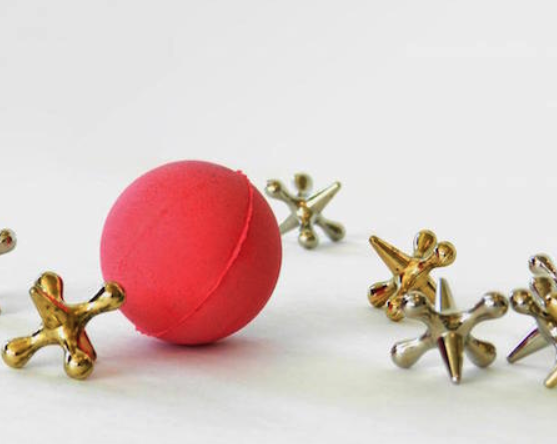
A red rubber ball is shown on a white backgrond. It's surrounded by gold and silver jacks (old fashioned children's toys), all of them bearing sharp points
Unblock and reinvigorate your sacral chakra with the Womyn’s Internal Toning Kit

The website’s blog offers chances to “enhance and deepen your connection to the universe and learn to go with the spiritual flow.” The section on our team of five womyn who form the “Your Search Within collective” includes Natural Products Guru Yonia Cuervo, New Technologies Revelator Nagine Xavier-Woo, and Insight Channeler Starryn Fairchylde. They guide each spirit toward their cosmic energy source. (Funny how each influencer’s photo looks just like me, isn’t it?)

Lily and I have never monetized the site. But then, it doesn’t exist to gather income. We made it to poke fun at the idea that one can buy virtue and become a more pure person by imbibing, inhaling, or adorning oneself in a certain way. We hope it’ll make people laugh, of course. But after that, maybe they’ll notice how influencers manipulate us into feeling so insecure or inadequate that we spend time and money on obvious nonsense that we hope will shine up our tarnished halos.

Nihilism and Nightlights

The following is one of a series of six film review parodies I wrote for the Sunday Punch section of the San Francisco Chronicle in the 1980s. Each piece featured imaginary foreign films that I reviewed in the voice of a dry and humorless foreign film critic.

• • • • • • •

Among the new foreign film releases this season are two films by female directors: Bebe Francobolli’s ode to Dada, Ciao Chow Chow, and Christiane de Geronimo’s children’s thriller, Nightlight.

Francobolli is the daughter of the Suprematist painter Mazlow Molotov (“The Black Russian”) and Constructivist painter Kiri de Kulpe Kloonig (a former courtesan known as “The Dutch Treat”). Bebe’s parents met in Rome at an international stamp-collecting convention and became Italian citizens before their only child was born.

Named Bebe Francobolli (literally Baby Postage Stamps) after her parents’ avocation, she refused to become a philatelist and rejected the art of her ancestors. She turned to Dada, the nihilistic movement that created “non-art,” laughed at overly serious artists and spawned Surrealism.

Close-up of a very fluffy chow dog's face. It's two front feet are draped over the end of a platform just below its head.
Dadaist director Bebe Francobolli’s beloved Chow Chow, Antipasto, star of her ridiculous early films

These influences can be seen clearly in Ciao Chow Chow, in which Bebe herself stars. Translated from Italian into English, and then back into Italian again, with no subtitles, the film begins and ends with Bebe waving goodbye to her beloved Chow dog, Antipasto, symbol of her lost youth and of her ridiculous early films.

Ciao is a parody of a self-parody, masterful in its simplicity and in its bold statement that life is to be laughed at, and that nothing is serious or sacred.

Basically nihilistic, with Dadaist subject matter and camera angles, this film is convoluted and uneven, personalized and stylized, and will make no sense to anyone who has not seen Bebe’s early travelogue films. Yet, Bebe promises that it will be her last film work, and that alone has prompted critical acclaim.

Avant-garde director Christiane de Geronimo’s Nightlight tells the terrifying story of the night the Mickey Mouse nightlight burned out in the Turner household. Little Bobby Turner is forced to face The Clown Puppet, The Vicious Animal Slippers and The Dreaded Man from Under the Bed.

A brightly painted wooden or papier-mache clown with a painted face and huge bowtie stands outside, his right arm chained to a fence
In Christiane de Geronimo’s Nightlight, the terrifyingly blank-eyed Clown Puppet is finally subdued with a chain around his upraised arm—or is he?

Filmed in black and white, Nightlight captures the shadowy horror of every child’s bedroom, and forces even the adult viewer to come to grips with The Thing in the Closet. Not for the squeamish.

De Geronimo’s earlier attempts at children’s thrillers include The Teddy Bear with No Face, Scream, Barbie, Scream and Revenge of the Katzenjammer Kids, in which comic-strip characters from the past are set loose on an unwitting Nebraska farm town.

Nightlight, the third of her bedtime stories series, features the late French film star Estella de Lumiere in her final role before the dreadful accident on the set of Murder on the Trampoline.


A hand-colored antique sepia-toned photo of two Japanese sumo wrestlers
Coming Soon: Professor Haro Hiru instructs one of his students in Fujiko Shiatsu’s sumo wrestling remake of The Music Man

Next month, two recent remakes: Canadian filmmaker and ice-hockey champion Pete Steed’s sport-oriented version of A Midsummer Night’s Dream; Fujiko Shiatsu’s sumo wrestling remake of The Music Man.